Author: Ravi Kailas (ficustours@gmail.com)
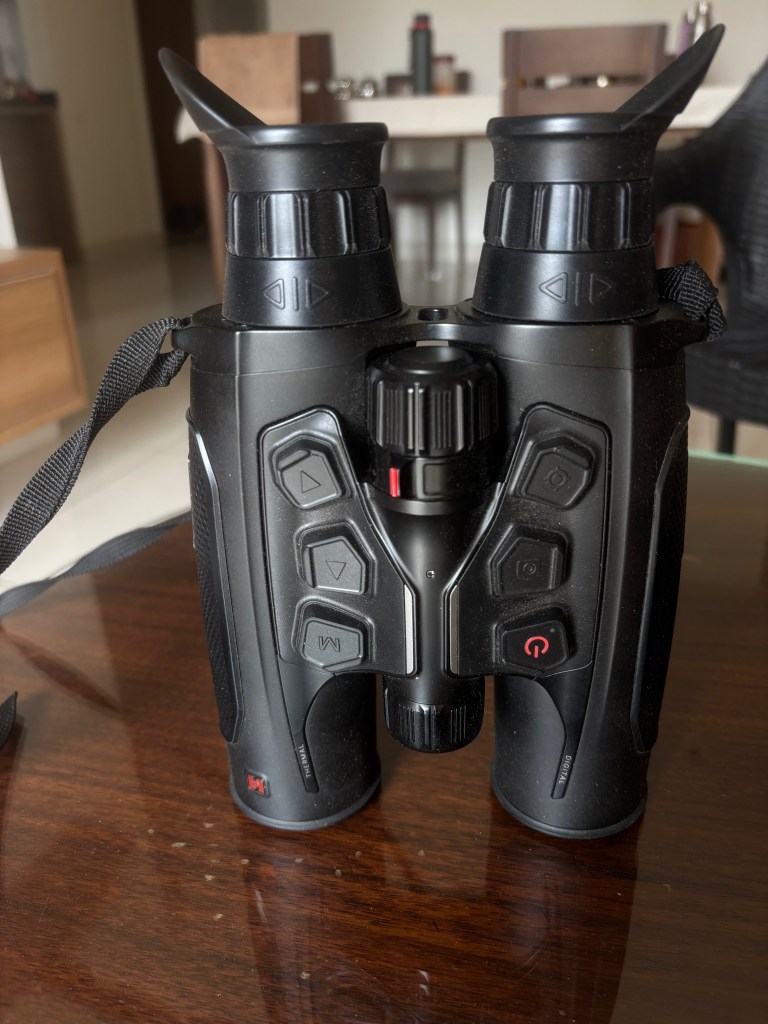
After years of seeing mammalwatchers using thermal scopes, I finally took the plunge and invested in a thermal sensing binocular – a Hikmicro Habrok 4K 2.0 (HE25L) – earlier this year. The immediate impetus was looking through another a similar, albeit higher-end thermal device (I believe that was a Habrok Pro), and being wowed by seeing a pride of lions, in predawn pitch darkness at Gir NP. The rendering in thermal, glowing white big cat shapes walking through the forest, was ethereal. I always knew there is practical value in using thermal devices to view nature – both to locate (some) wildlife with their thermal signature and observe them, discreetly/without blinding them with flashlights. Now, I also appreciated the aesthetic upside to watching wildlife in this unique manner. Another very appealing aspect of this Habrok series, was its familiar binocular form. I was duly infected with a severe case of GAS (Gear Acquisition Syndrome, for those not privileged enough to have experienced such episodes or just not knowing how to diagnose the symptoms).
In reality, I was just window shopping initially. I was not realistically expecting to afford the investment, given prices that I had heard of, in the (not so distant) past. I had limited my search to devices in a binocular form and two brands were offering them – Hikmicro’s Habrok lineup and Pulsar’s Symbion lineup. To my pleasant surprise both lineups were multispectral devices, which included a digital optical mode with a 4K sensor to observe and image in colour, which was also sensitive to infrared light, allowing for high resolution views in the dark, in addition to their thermal sensing abilities, making them even more attractive as do it all devices (a potential replacement for binoculars? camera?). Some cursory research showed pricing that was well over my budget (and in line with what I was expecting), that is until I found Hikmicro’s HE25L, Hikmicro’s entry level Habrok, that was priced just about tantalisingly close to what I could considered spending without pinching my wallet (I could now, theoretically, write off the expense by consuming a couple fewer masala dosas a week, over several years).
Now that I have had it on hand, my thoughts after using it in the field, initially in the sultry urban parks of Singapore and in the dry heat of early summer in Rajasthan, followed by the relatively cooler, albeit still humid, summer/monsoon weather in south India’s hills.
Ergonomically, while large, the Habrok fits well into my hands, with all the buttons quite easily accessible. The binocular design makes it easier to observe for longer periods and the (my spectacled or otherwise) eyes slotted nicely into eyecups. The (numerous) functions/buttons take a little getting used to, but did not take too long to become part of muscle memory. The central focus wheel also feels natural for a long-time binocular user, but focussing wheel is slow to turn and respond. Despite its well built feel, the weight feels just right around the neck, and should be fine for relatively long walks, attached to the well padded (supplied) neck-strap.
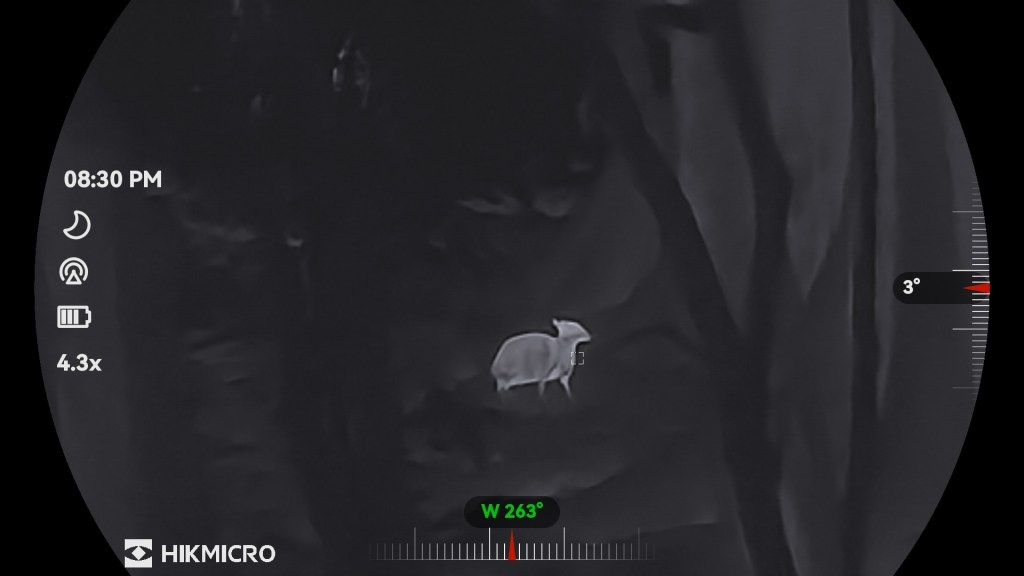
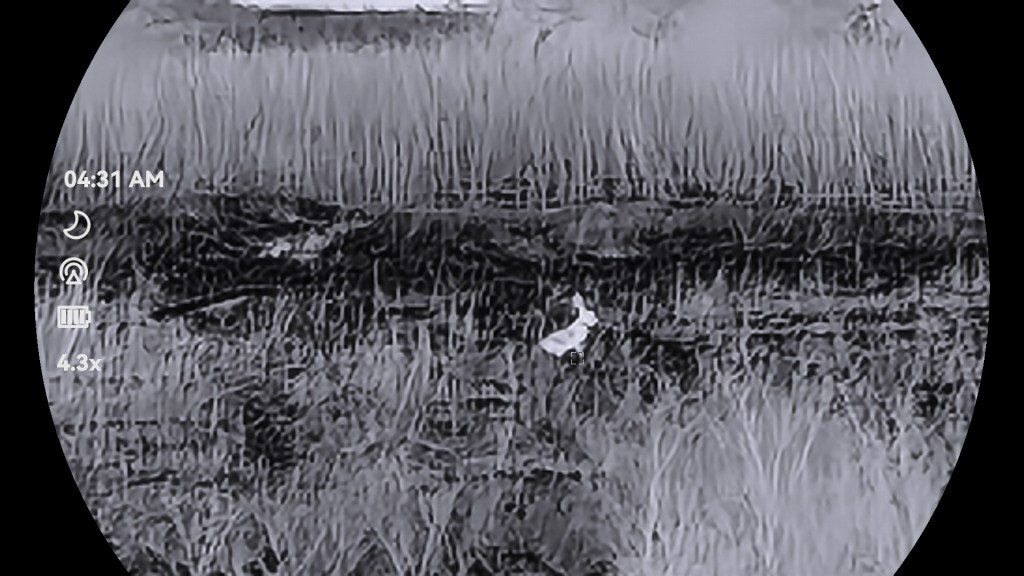
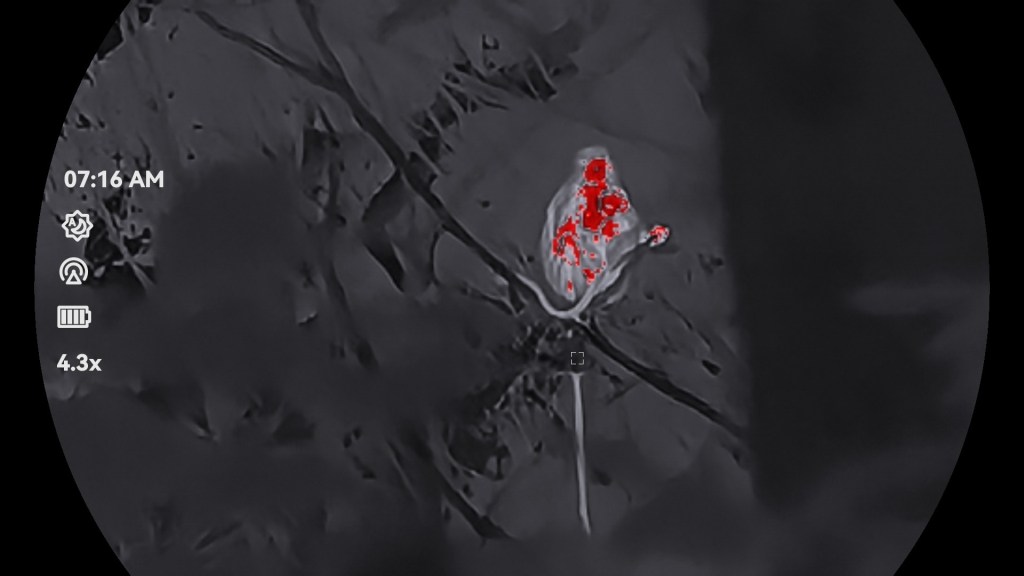
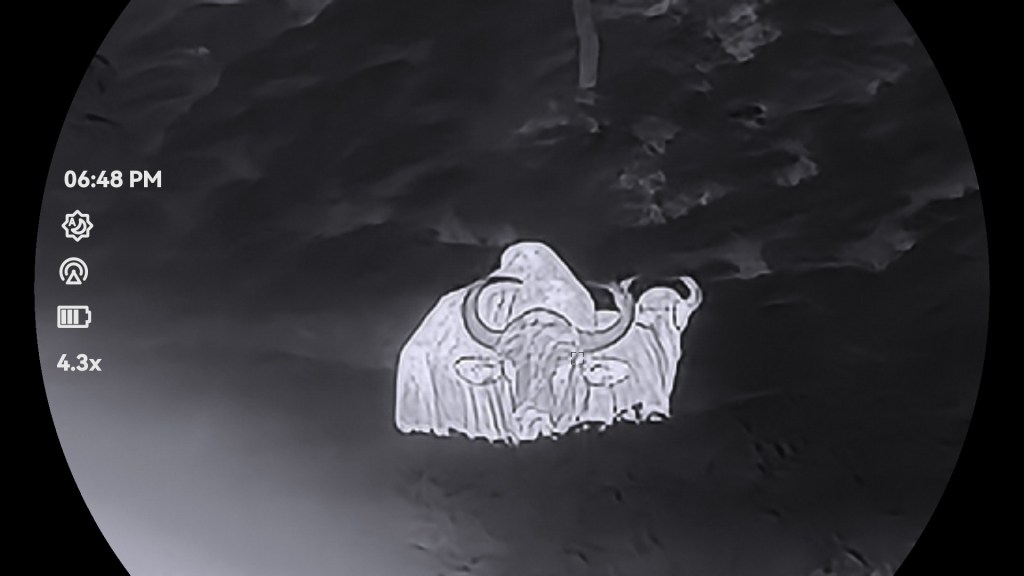
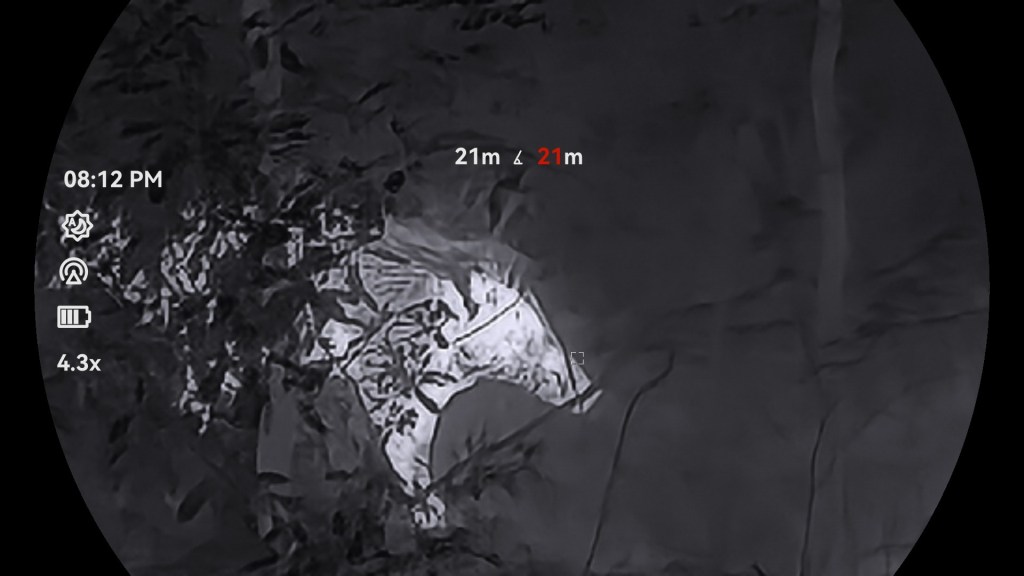
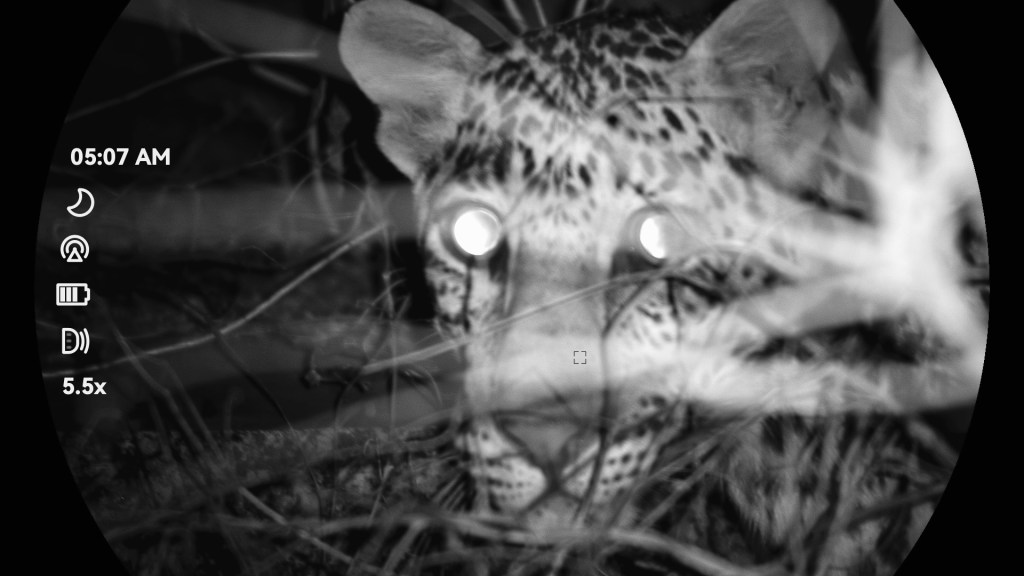
Thermal sensitivity was excellent, and I could almost always see ‘warm’ shapes of mammals (including tiny rodents) and birds, in a variety of conditions (forest, scrub, agriculture fields, summer, day, night, rocks, monsoon, distances). While there was a drop in contrast during/after significant rain, I could still detect animals in those conditions. The thermal resolution, however, is not this Habrok’s strong suit, and was mostly glaringly found wanting while trying to find animals in rocky terrain (which were always glowing hot, regardless of the time of the day). Even in those conditions, and with some practise, I could make out warm shapes (I found a pair of Ruddy Mongoose, basking on the rocks, this way, as far away as 200m), but I had no way of telling what the animal was without switching to the optical mode. The poor resolution also meant that the thermal mode was best used at the 4.5x base magnification, as anything further zooming just makes the image a fuzzy mess. However it was still, almost surprisingly, usable when I was able to identify, observe and record a Jungle Cat at a distance of over 100m, an Indian Hare, at approximately 80m, both in open fields and various instances of detecting (as rodents), between the 30m and 60m mark, in bushy scrub. As is intuitively obvious, the larger/closer the animal the easier it was to put a shape to an ID. The thermal mode was also quite useful for detecting well camouflaged/partially hidden birds (mostly) and small mammals, in the cool hours of the day (when temperatures were typically less than 28C), especially in the shade. The device offers various renditions in the thermal mode, but I found seeing in ‘White Hot’ (and rarely ‘Red Hot’ when more contrast was needed, or ‘Black Hot’ to detect shapes in bright sunlight) to be my go to setting.
Observations in the dark were further enhanced with the Habrok’s sensor’s ability to ‘see’ in infrared light, with the supplied infrared emitters (850nm and 940nm), which turns out quite invaluable in the field when one can quickly switch from thermal into optical, albeit in the IR mode, to better observe source of heat. It also helps that the IR source (especially the 940nm wavelength) is not visible to mammals in general, except as a faint red glow/source of warmth (which, hopefully, serves the dual purpose of keeping our presence discreet and not disturbing the animal’s natural behaviour). One limitation that I noticed while using the IR mode was that it was difficult to ‘focus the beam’ (done automatically) on the subject, especially when the foreground is busy (biases towards closer objects). The sensor also tends to get quite noisy when the light falls off, which further highlights this limitation.
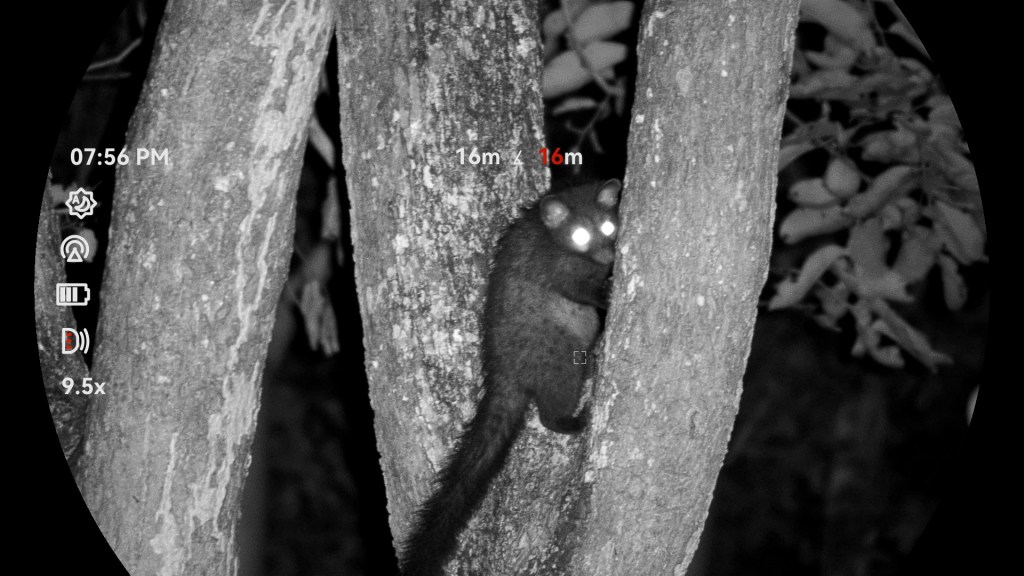
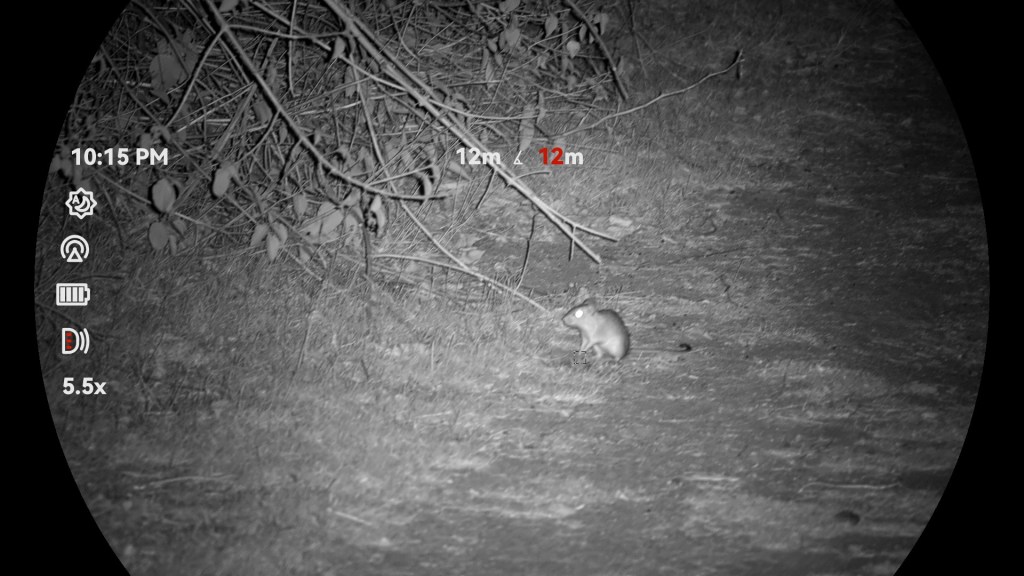
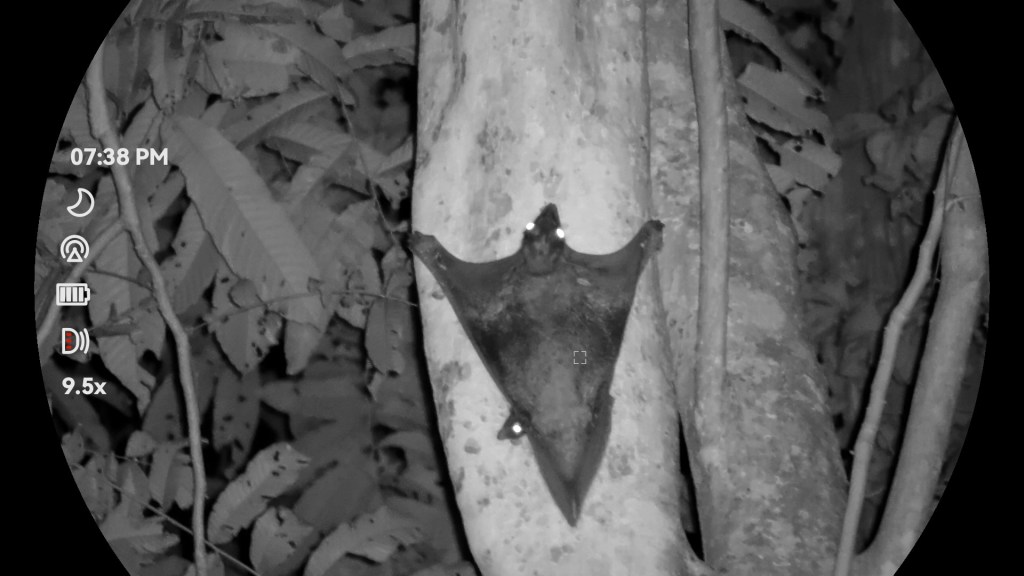
With a 4K colour sensor, and a magnification range from 5.5x to 22x, the Habrok promises much as a daytime observation tool, potentially, even a binocular replacement, with an ability to image and switch to thermal if need be. On paper, a pretty good package. However, while practically useable, it does not quite live up to my expectations, especially in contrasty light, as is often the case in the field. The views themselves are not quite satisfactory, especially if you are observing nature for detail and pleasure.
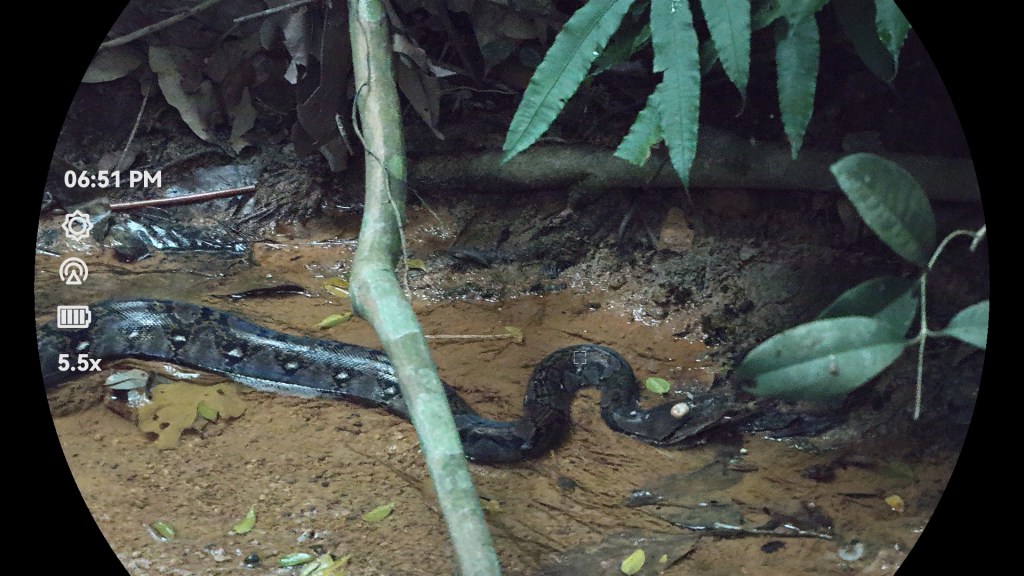
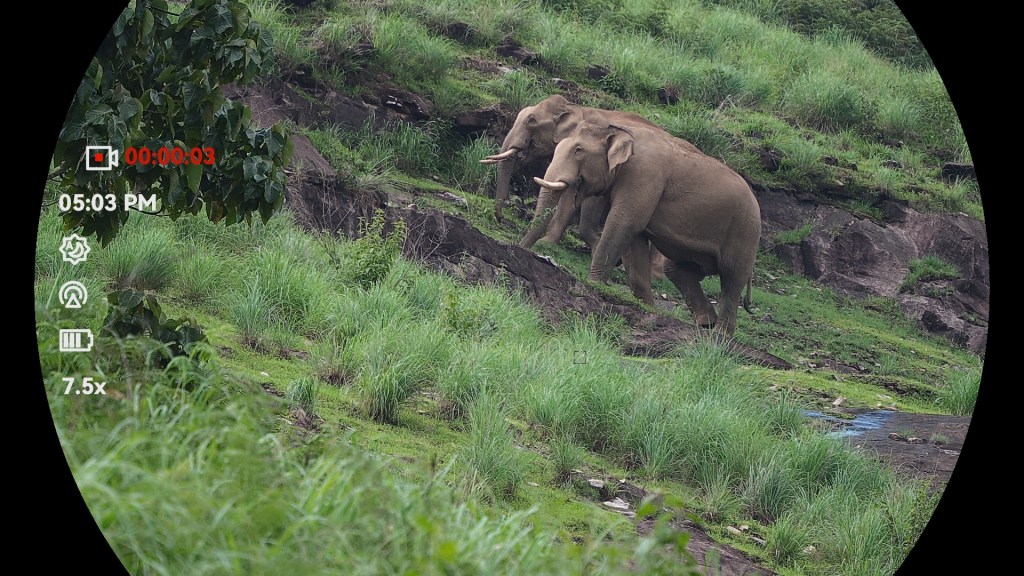
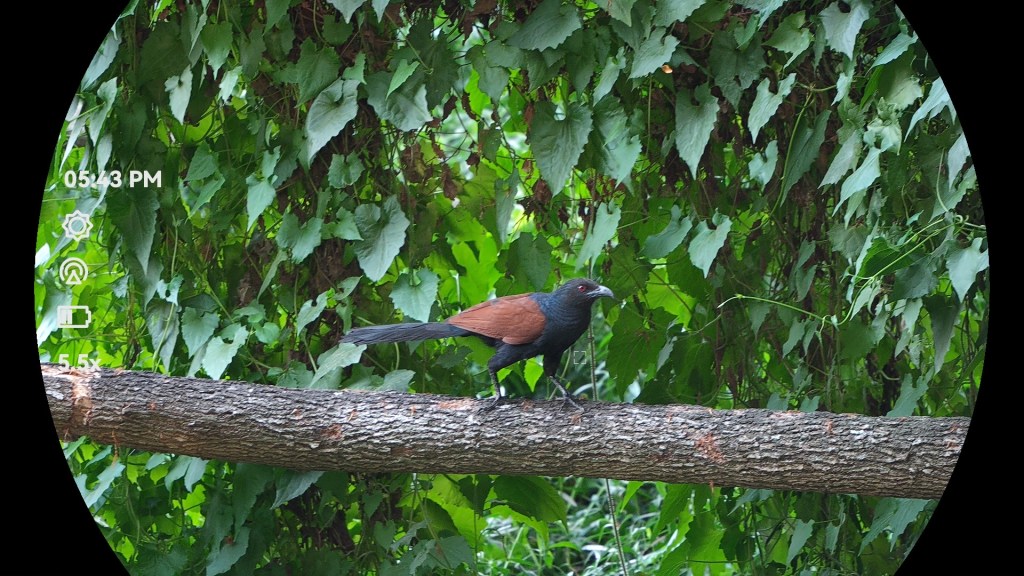
With a 4K imaging in digital optical mode (both night and day), things can/have been more than just useful for record shots, especially when the subject is close at hand (but wildlife rarely is, as we know all too well). It also helps that you can take videos (with sound) in the same resolution, just in case there is interesting behaviour to record while one is observing. One can also record images and videos on the thermal mode, but there is virtually no practical use for this, except for the unique perspective (or if the animal was sensitive to IR light), even if the resolution was better. While it is easy enough to hold the device steady for observations at any magnification, the useful (invaluable for recording video) electronic IS kicks in at 11x zoom. The device records media to inbuilt memory and can be downloaded (only) through Hikmicro’s ‘Sight’ app – a slightly cumbersome process, so perhaps wise to be trigger unhappy.
Battery life is handy and I am yet to run out of juice in the field (to be fair, I am on the conservative side in these matters). It helps that the device comes with four 18650 batteries (two spare), which should last for long days (nights) in the field. Another upside is the ease at which one can toggle between thermal and digital optical modes and access various other practical functions (such as capturing images, the zoom functionality, rendering options etc) with a single press of a button. In all, it is a very well thought through, easy to use device in the field.
Is it a worthy addition to my kit? My primary use case is finding and observing mammals at night and the Habrok fills more than one gap for me in those pursuits. As my first thermal sensing device, it gives me the ability to be discreet, neither spooking the animals, nor overtly disturbing them, while looking for nocturnal wildlife. The thermal sensitivity and range has proven practically handy in a variety of conditions in which I have used it, but especially so in forest, scrub and farmland, where the animals are within 300m. To be able to see in IR, in the optical digital mode, is an icing on the cake, which provides an opportunity, not just to observe and ID the animals in good resolution, but also take pictures and videos, discreetly. I find searching with red light for eyeshine from a moving vehicle, followed by observations in the optical mode with the Habrok, while stopping to look (switching to thermal to locate the animal, when it moves about), works very well. While stationary, using the Habrok’s thermal mode to scan potential spaces is a more discreet alternative to the flashlight. Talking of scanning, this Habrok’s thermal views do not lag or freeze while on the move (even from a vehicle at normal safari speeds, strictly tested while not in a frenzied rush to get to a Tiger lying by a waterhole, whether you want to get there or not), which I understand can be an issue in some other thermal devices. One downside, given its binocular form, is its rather large size, which means that I have to choose this over traditional binoculars or cameras, while in the field. Unfortunately, while it is a very capable device, it is not, qualitatively, a replacement for either. During the day, given my interests, I would definitely choose the traditional optics, but at night, the Habrok is the first thing that goes into my bag and it is a toss up between a camera or binoculars depending on whether I want to see well, or take better pictures.

