
Author: Ravi Kailas (ficustours@gmail.com)
Dates
16th to 23rd April 2023
Locations visited
Arenal Volcano, La Selva Biological Reserve, Monteverde, San Gerardo De Dota
“The diversity was striking”, was the first response I had for anyone asking about my (what turned out to be) an all too brief, natural history oriented visit to sample of Costa Rica’s lowland (Caribbean Slope) and cloud forest (Central Highlands), earlier this year. This is post is about the long answer though, and delving a little deeper into this experience, this diversity included strikingly colourful (tanagers, toucans, hummingbirds and honeycreepers the main culprits) and abundant birdlife, matched in visible diversity only by invertebrate fauna (ants were especially abundant), seven species of snakes, innumerable forest lizards (mostly Iguanids of various kinds), several frogs (including two species of those colourful poison dart frogs) a mind-boggling variety of plants, fungii and a handful of mammals as well (the only group that showed somewhat below expectations, both in abundance and diversity). Another striking feature of the entire experience was the greater than average visibility of wildlife (from my personal experience that is), even among groups that are normally difficult to see (including snakes and frogs outside of the rainy season), especially in deep, dark, rainforest conditions. Was it the quality of protection, that Costa Rica is well known for (a well above average 25% of the country is under protected areas and hearteningly over 50% is forested)? Is it the quality of the guiding (this ties in with the conservation ethos of the country)? Or is there something unique about neotropical forests that causes this happy situation? I suspect it is a combination of all these factors, and, likely a couple I have not thought about. With so much land under forest, and a spine of volcanic mountains running through its middle, scenic vistas of volcanoes, forested mountains, rivers and mountain streams abounded as well.
Detailed Report
16th April, Arenal Volcano:
An hour or so walk at sunrise, around the hotel (Fairfield Inn by Marriot close to the San José airport) was delightful for the surprising variety of birds in an urban green spaces, including Boat-billed Flycatcher, Tropical Kingbird, Blue Gray Tanager, Rufous-collared Sparrow, Clay Coloured Thrush, Large-tailed Grackle, Rufous-naped Wren and a handful of birds that we could not identify (including a parrot, a finch like bird and a hummingbird). A great way to get our eye in.

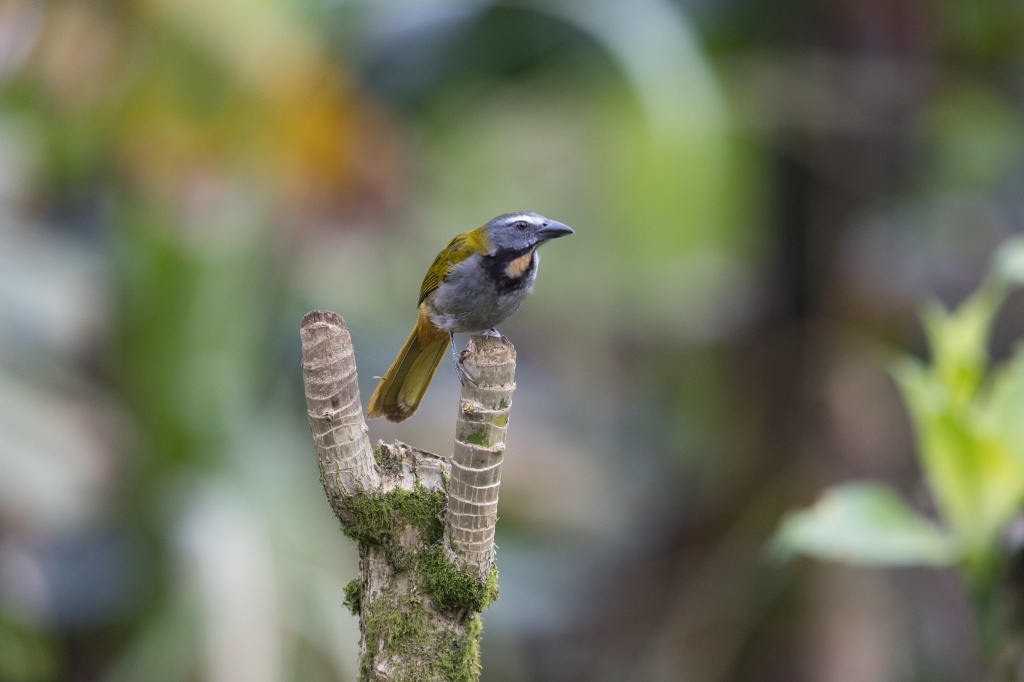

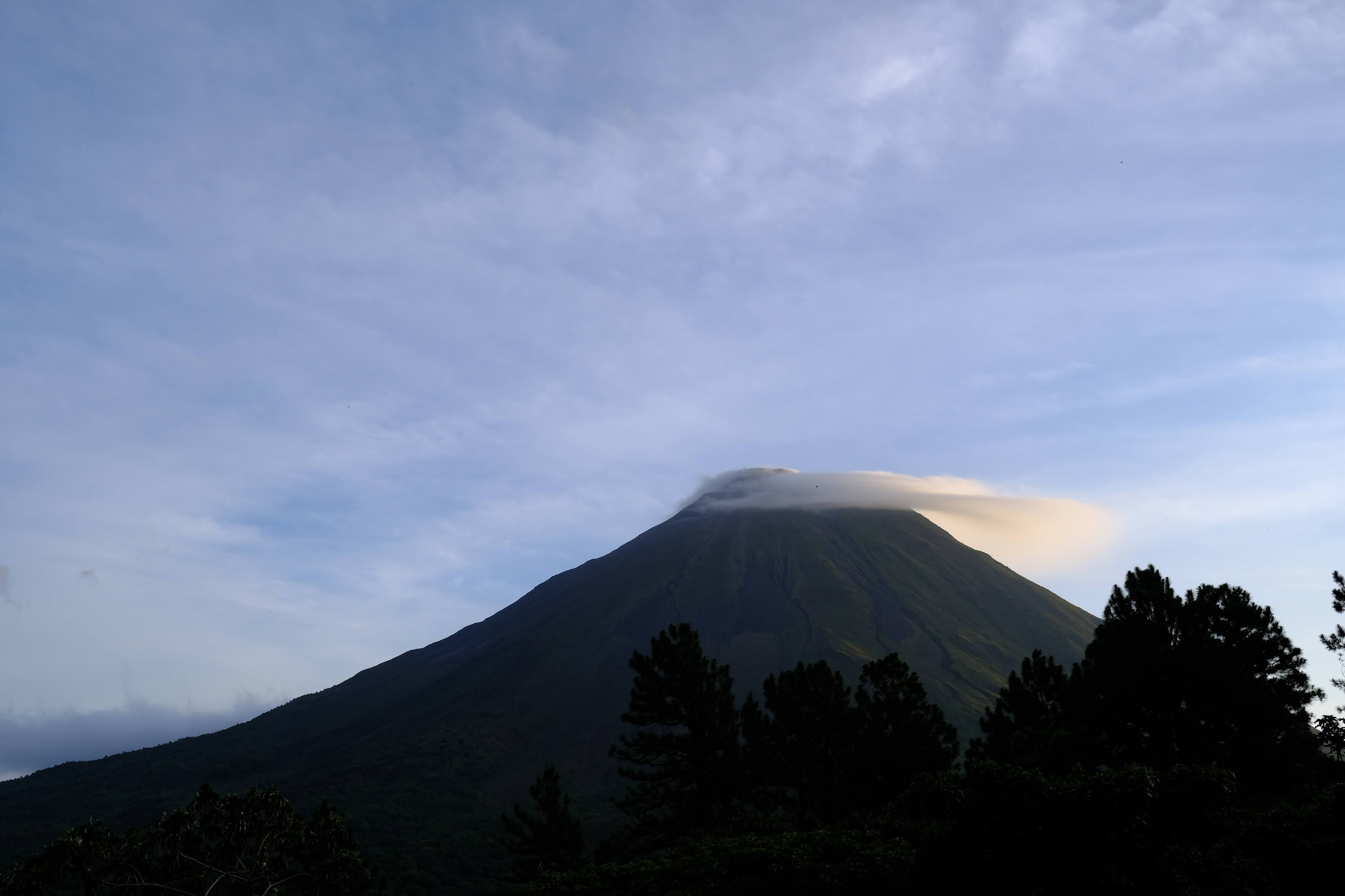
An early hotel buffet breakfast later – our first introduction to Gallo Pinto (rice and beans) and fried plantain, a staple in these parts! Soon after, we were ferried to Vamos Rent a Car to get our 100000mi old (rather overpriced for its quality, but otherwise good service at Vamos), 4×4 SUV. It was about 10a when we hit the road to Arenal, taking us northwest and soon climbing mountains (we hit 4000ft at one point) adjacent to a trio of national parks (including the well known Braulio Carilloa NP), before descending into the Arenal landscape, via the spa resort town of La Fortuna (a great place for lunch, with myriad cuisines of offer). Along the way our first bite of some of that lovely armchair birding that came to characterise our experience in Costa Rica – a stop for tea in a roadside restaurant surrounded by cloud forest, produced the colourful Bay-hooded and rather more plain Blue and Gray Tanagers, Buff-throated Saltator, Rufous-tailed Hummingbird, Swallow-tailed Kite and Turkey Vultures soaring, and Rufous-naped Wren skulking in the underbrush – all this while we were sipping tea and casually glancing out of the window. A little further down the road, a black snake crossed the road (Mussurana?), before views of the majestic lenticular cloud capped Arenal Volcano held our attention until we reached Arenal Observatory and Trails – our host for the night. Oh and the last 20 mins to the lodge was along a forested, dirt road, filling us with anticipation of wildlife sightings everytime we passed. Reached the lodge around 330p, a good 2.5hrs longer than Google Maps estimated (not the most reliable service in this country … Waze seems to work better), in part due to tea, lunch and a more lingering eye on wildlife than the service anticipated.
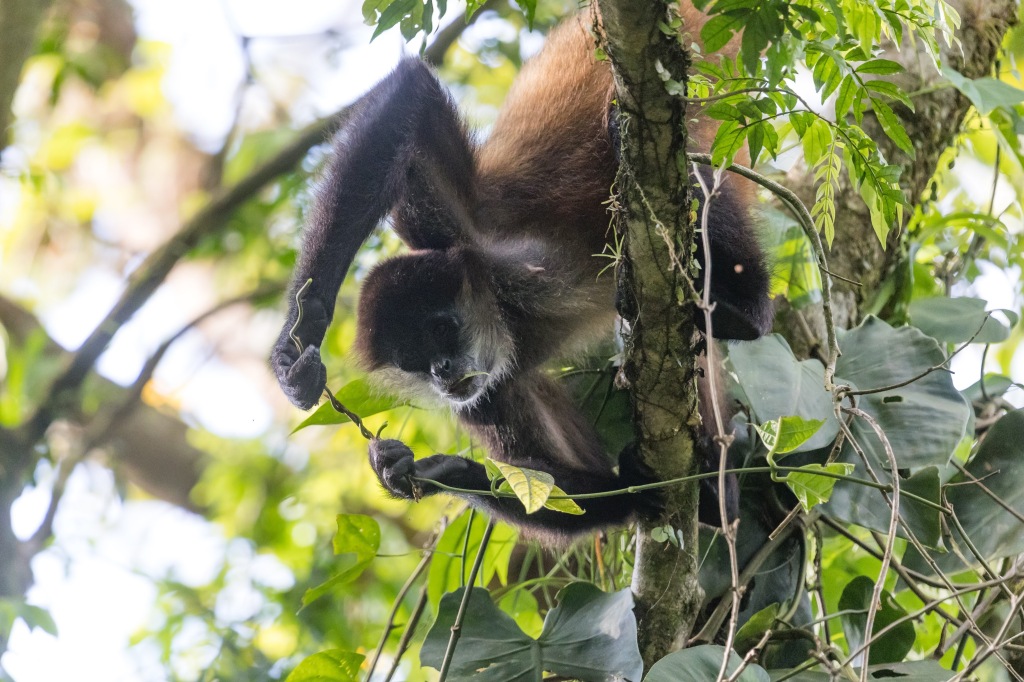


One striking feature of the drive was the complete lack of mammal sightings, not even of human commensals. As soon as we entered the lodge though, we were greeting by our first mammal – a Variegated Squirrel feeding on fruiting tree, close the the car park. The location of the lodge at the base of the Arenal Volcano, surrounded by forest and overlooking the Arenal Reservoir, was quite stunning. In as much it was a quick turnaround, dumping our bags in the room to explore the trail system within the property. The first stop on an open balcony overlooking a feeder (some conveniently placed watermelon wedges, the attraction) which was popular among Great Currasow and the Montezuma Oropendola. These messy feeders, dropped enough bits on the ground to attract a family of White-nosed Coati to share in the riches. Soon after we followed the trail markings to the frog pond, which initially took us through the gardens hosting the accommodations (which was great for species like Bananaquit, Variable Seedeater, Rufous-tailed Hummingbird, Passarenii’s Tanager, Montezuma Oropendola mostly). Our first Central American Agouti was foraging, unfettered by us, on the manicured lawns as well. The trail took us through a patch of dark primary forest, and included our first primate sighting of the trip – a troop of Central American Spider Monkey, moving noisily, quickly, through the rainforest canopy. The other highlight from within this patch of dark forest was of a pair of Chestnut-mandibled Toucan actively foraging in the canopy in close proximity to the trail. The pond though, was bereft of frogs… or we saw none of them, when we were there at dusk. There was evidence though, in terms of what appeared like egg masses with a gelatinous casing (species?), on leaves overhanging the pond’s surface, and a cacophony of sounds, some of which could have well originated from Anurans. We returned to our rooms on the cusp of a drenching shower.

An after dark, rainy drive from the lodge through the forested road towards La Fortuna, then turning left towards Arenal Sky Adventures Park, proved very quiet for mammals (was expecting to see more, given past trip reports were replete with sightings of cats, Kinkajous, porcupines et al. on the former segment of this route), except for one possible Bushy-tailed Oligo, rapidly crossing a wire in a clearing. A Brown Blunt-headed Vine Snake and the massive Smoky Jungle Frog made up the herpetofauna list and a Common Paraque was the only bird, on the drive.
A walk back to the frog pond at night produced the iconic Red-eyed Tree Frog, duly settled on a leaf by the pond, as well as a Masked Tree Frog on the trail.
17th to 20th April, La Selva Biological Station:


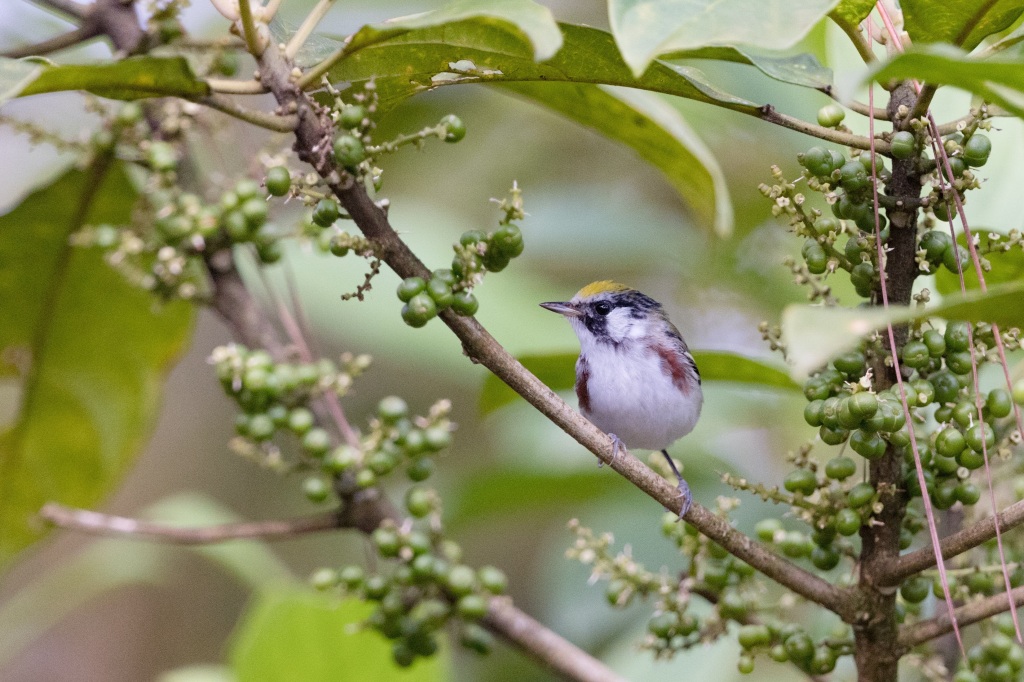
The next morning , at the break of dawn, woke up to a troop of Central American Spider monkey, just about getting active in the canopy opposite the sit out in our room. At sunrise, we were greeted to magnificent views of the Arenal Volcano, capped with a lenticular cloud, from the deck overlooking the surrounding landscape. Crested Guan were enjoying the freebies at the feeder this morning and there were Chestnut-coloured Woodpecker and Dusky-capped Flycatchers among the hitherto unseen birds, in the brief visit here. Then there was a frenetic activity around a fruiting tree, conveniently located on the edge of a parking lot, from both bird photographers and birds (Red-legged and Green Honeycreepers, Blue-gray Tanager and Chestnut-sided Warbler among the main players). A short walk through rest of the campus produced a Gartered Trogon, rather conveniently (for those wanting to observe them) for nesting on a manicured bush, as well as Summer and Crimson-collared Tanagers, the ubiquitous Rufous-tailed Hummingbird, a large nesting colony of Montezuma Oropendola and Great Kiskadee. A bold central Central American Agouti, Variegated Squirrel and White-nosed Coati, made up the list of mammals.


We visited the Arenal Sky Adventures Park, later that morning (9 to 11 AM), to experience the canopy walkways, that pepper the trails here. Our curtailed loop through what appeared like somewhat disturbed primary forest (unlike the trails through Arenal Lodge, which appeared pristine), was rather quieter than expected (perhaps given lull in late morning activity) and only produced two canopy obscured troops of Mantled Howler (we heard them better though), a distant Yellow-throated Toucan, Buff-rumped Warbler, Squirrel Cuckoo, Golden-hooded Tanager and a foot long brown snake, with lateral stripes, disappearing through the leaf litter.


It was time to check-out from the excellent Arenal Observatory Lodge (we should have planned more time here in retrospect) and head on a supposedly short (less the 2 hrs as per Google). An overpriced lunch at La Fortuna’s tourist traps (which is enticing for the variety of global cuisines on offer), followed by an uneventful drive to Puerto Viejo, took around 4 hrs, but if you want to get to the entrance of the La Selva Biological Station, especially with the time pressure of a 5PM closing time for check-ins, please avoid using Google Maps to navigate to the La Selva Biological Station from here. We were led up a garden path or the like after reaching Puerto Viejo, leading into unpaved, countryside roads, with only some (very) broken Spanish uttered by my travel companion to some evidently puzzled locals, got us back on track (I have subsequently learnt that you should look for the Organization for Tropical Studies on Google, for better results). Anyway we lumbered into the reception pretty close to when we could no longer check-in, but things were rather less confounding since.
The air was palpably humid and warm here – par for the course at this location, as the sun set soon after we arrived. We were greeted by what appeared to be a species of Macaw, noisily flying overhead and some late bird activity in the trees planted within the campus, which borders pristine lowland forest (contiguous with the extensive Braulio Carrillo National Park) and disturbed edge habitat.

While we anticipated much (given effusive trip reports) on the short night drive (about 2mi) through a woodland patch on the dirt road leading to the outside world, then skirting the station on one side and ‘fields’ on the other, the activity proved very quiet (barring a shy Common Opossum that stepped towards the road tentatively). Then a night trail (the trails are open through the night for those staying at the station) within the private reserve, while not especially productive was engrossing for great views of a vocal Crested Owl, a massive colony of leaf-cutter ants, a few of those bioluminescent Click Beetle and the sounds, the smells and an almost eerie, encompassing darkness of this muggy lowland rainforest.
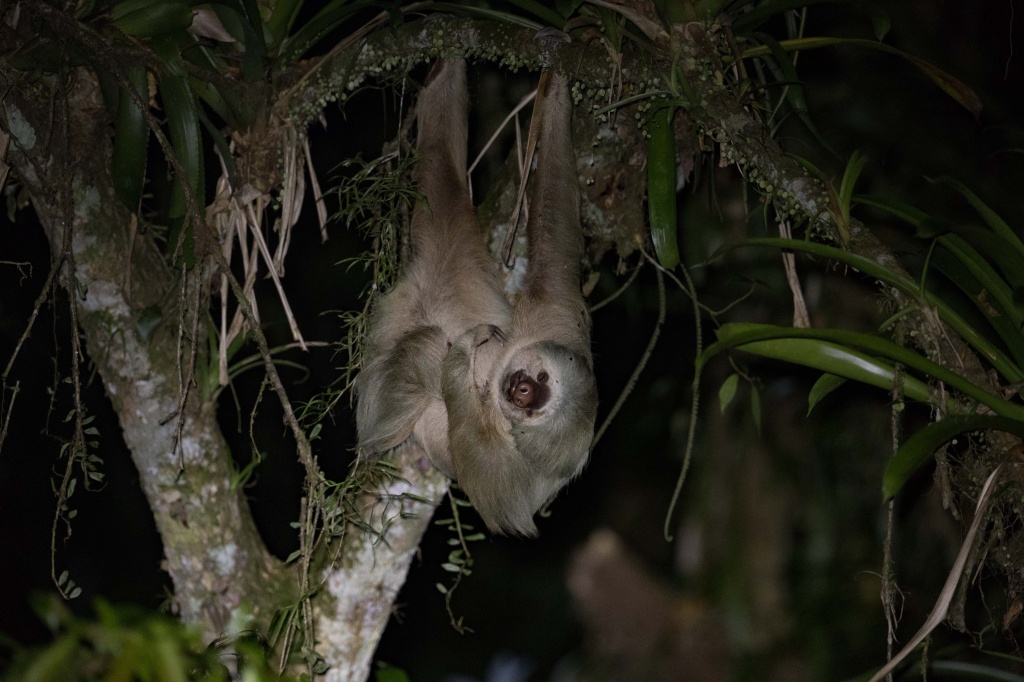
An early morning amble on the 18th, to the often visited bridge over the Sarapiqui river, was immediately fruitful for a Hoffman’s Two-toed Sloth (mostly napping) ensconced in the fork of a tree, as well camouflaged as it can be in plain sight. Most of the pre-breakfast activity was spent observing and photographing this regional speciality.


Around 8a it was time to join Luis for a guided walk (included for visitors staying at the accommodations) through the numerous trails crisscrossing within this privately managed forest. The 3 hour walk produced a wholesome diversity of birds, reptiles and other macro life with Great Tinamou, Squirrel Cuckoo, Slaty-headed Trogon, Masked Tityara, Whiskered Puffbird, Collared Aracari, Rainbow-billed Toucan, Broad-billed Motmot, Chestnut-headed Oropendola, Pale-billed Woodpecker, Bullet Ant, Leaf-cutter Ant colony, Central American Whiptail, Eye-lashed Pit Viper, various forest Anoles, Strawberry and Green and Black Poison Dart Frogs, various spiders, butterflies and moths. The rather modest selection of mammals included, the Hoffman’s Sloth (same individual, same location, same behaviour…. and often repeated story), Central American Agouti, White-nosed Coati, Long-nosed Bat and some distant growls of Mantled Howler.
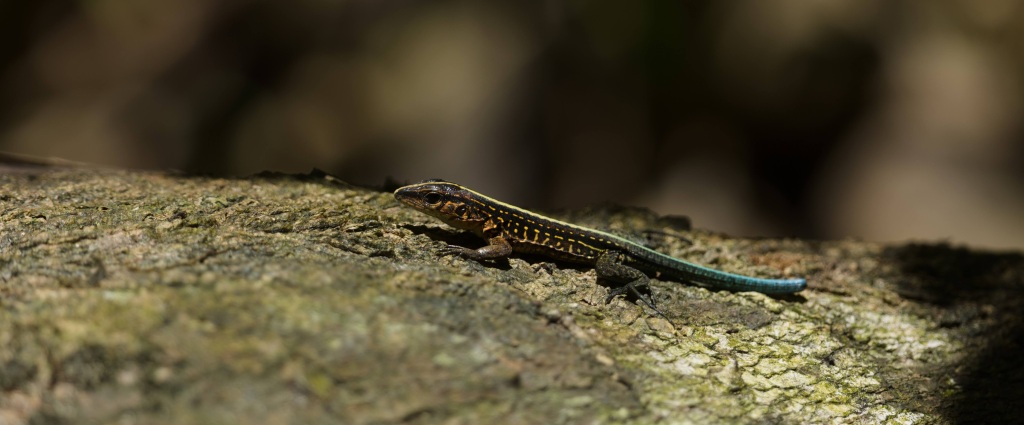
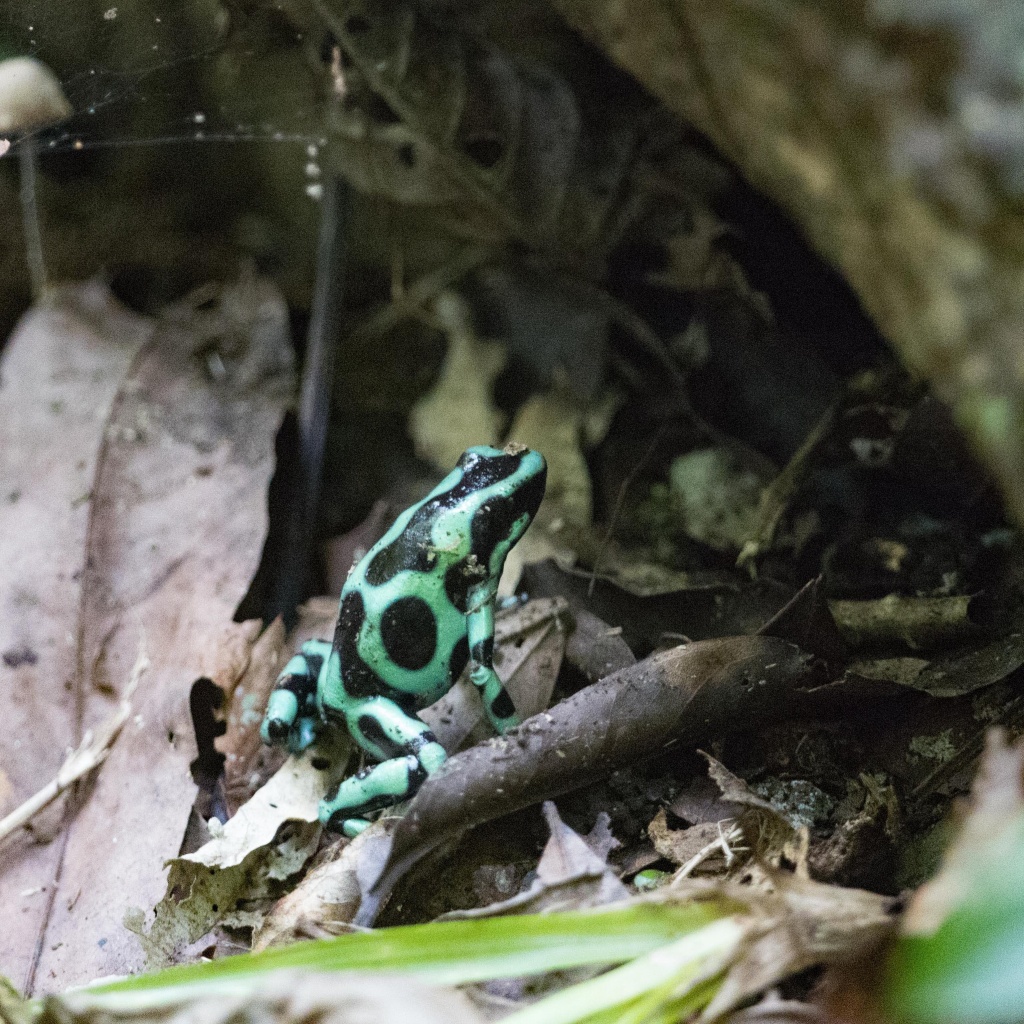

A bit of a rest in the mid-day heat and late afternoon to dark self-exploration of the trails produced Long-tailed Jacama, Short-tailed Nighthawk, the same sloth on the same bridge and a conversation with a fellow wildlifer whose guide, standing a few feet from us on the bridge, spotted an Ocelot, fleetingly, while we were in deep conversation about the heartenting abundance of hawks and jaegers at Cape Cod, or something to that effect.

This was followed by an engrossing night walk (this is arranged for a fee, if you ask at the reception) guided by Chris, filled with sightings of various frogs (mostly species of rain frogs, but also the iconic Red-eyed Tree Frog), Annulated Tree Boa, Snail-eating Snake and Eye-lashed Pit Viper and Spectacled Caiman. While we were keen on more mammals, the only species that showed were the arboreal Mexican Porcupine, using the bridge as a conduit in the canopy, Collared Peccary and the old-faithful Two-toed Sloth, a touch more active in the dark.


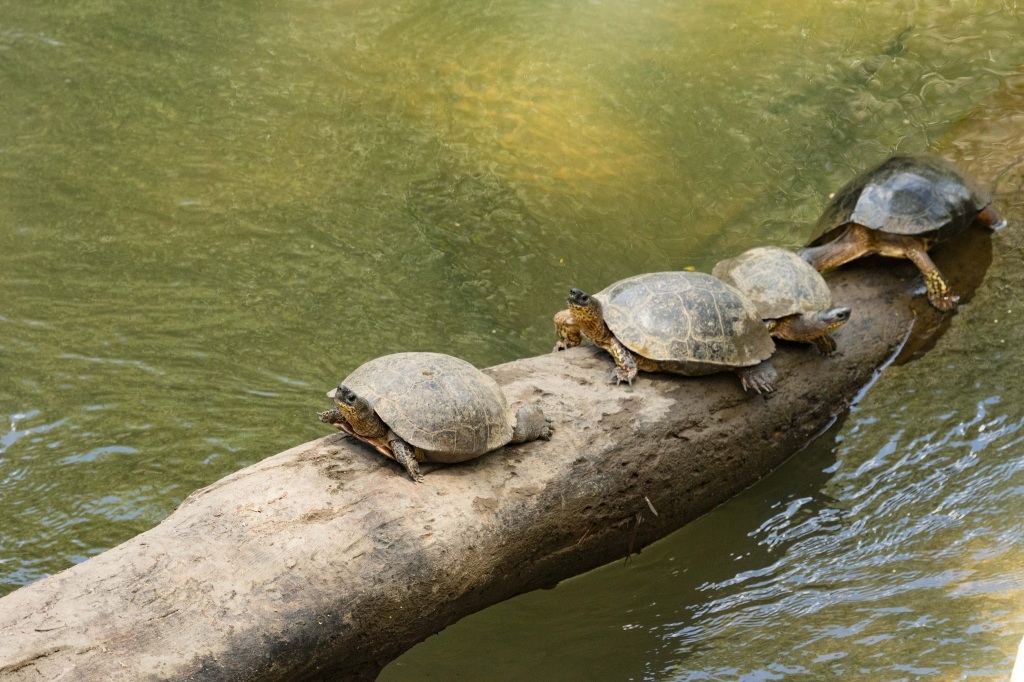
19th dawned bright and early (as per usual), with accompanying calls of Mantled Howler (still no sightings). We signed up for a guided birdwatching walk, and our guide, Wilson, unravelled a plethora hummingbirds (including Blue-chested, Scaly-breasted, Crowned Woodnymph and Stripe-throated Hermits, apart from the ubiquitous Rufous-tailed), Gray Hawk, Speckled Tanager, Black-faced Grosbeak, Yellow-legged Honeycreeper, Collared Aracari and Cinnamon and Crimson-headed Woodpeckers among the bird highlights. We also (finally) glimpsed a troop on Mantled Howler, albeit, mostly hidden in the canopy overhanging the river. A post guided walk, walk-about produced Neotropical Otter – yet another mammal from the bridge (which would have to be one of the most productive sites inside the reserve) and some Black-river turtles duly basking on a log across the river.

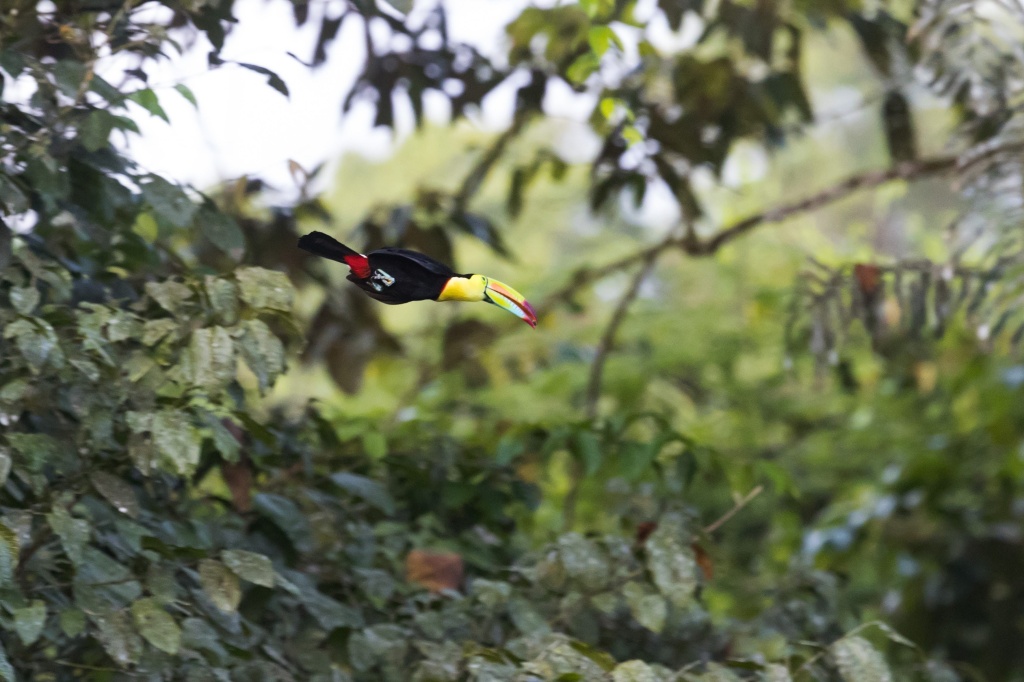
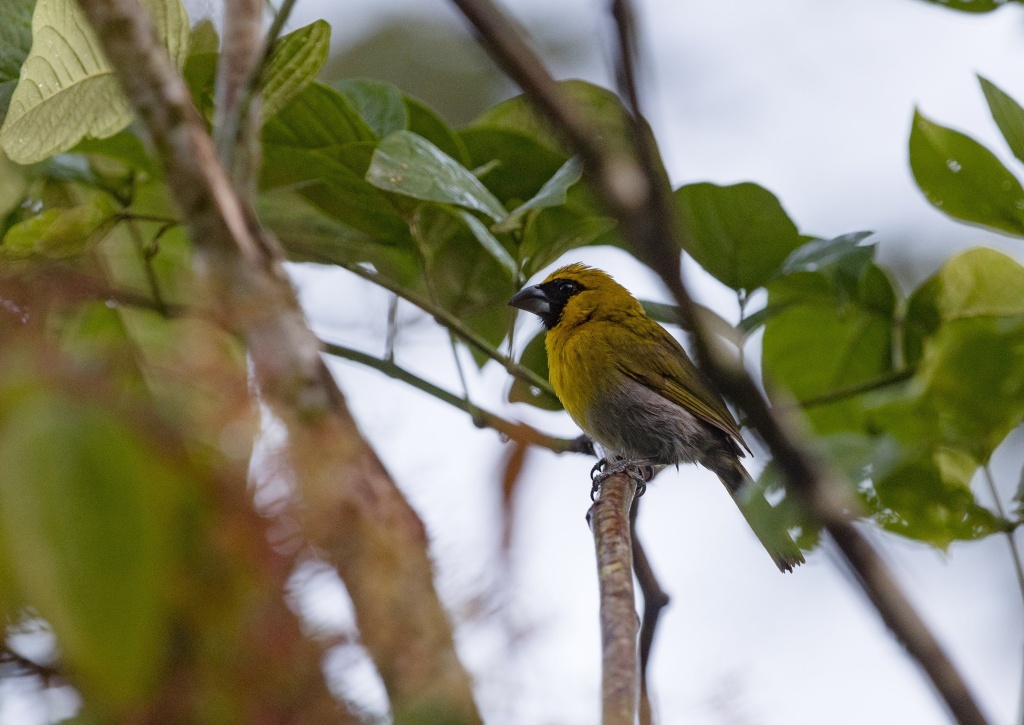
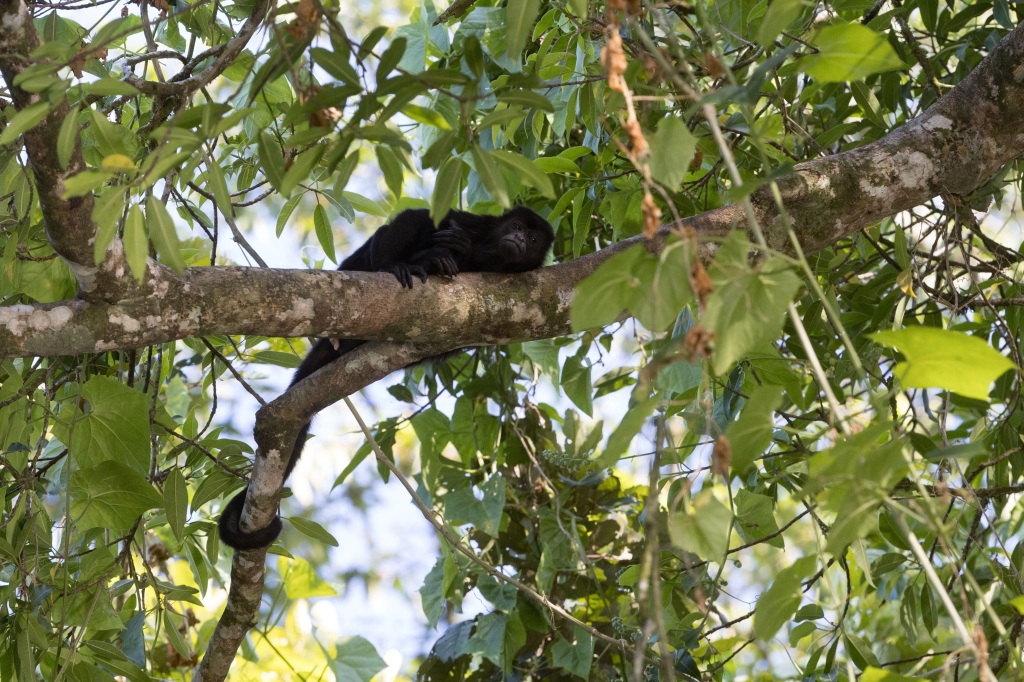
A two hour, afternoon (2-4) cruise along the Sarapiqui (regular departures from Puerto Viejo), took us through disturbed, riverine habitat (with a few villages and obvious human presence otherwise). This effort, though produced our best views of Mantled Howler, with three troops on the riverside canopy, as well as interesting species like Green Basilisk (several), American Crocodile and Boat-billed Heron, the former two basking in the heat of the mid-day sun.


A pre-dusk visit to an open habitat adjacent to the Biological Station, where macaws (species?) purportedly come to roost on almond trees, produced only a solitary and distant Bat Falcon and some distant parrots (species?) coming into roost. An interesting aside from this brief excursion was a ‘conversation’ between my cousin (whose Spanish struggled to keep up) and an older gentleman (who had much to say and kept repeating the word poooooma) who seemed to own a farm here. Later, we gleaned, that Puma’s are sometimes seen in this landscape, and he was perhaps suggesting an optimal time of the day (?) to come look for them. This evening affair was followed by the quietest night drive yet, which produced only Common Paraque and a pair of Tapiti (Forest Cottontail). A night walk through the trails proved a touch more productive with two Wooly Opossum, a Mexican Porcupine and Collared Peccary on show.


20th to 22nd April, Monteverde
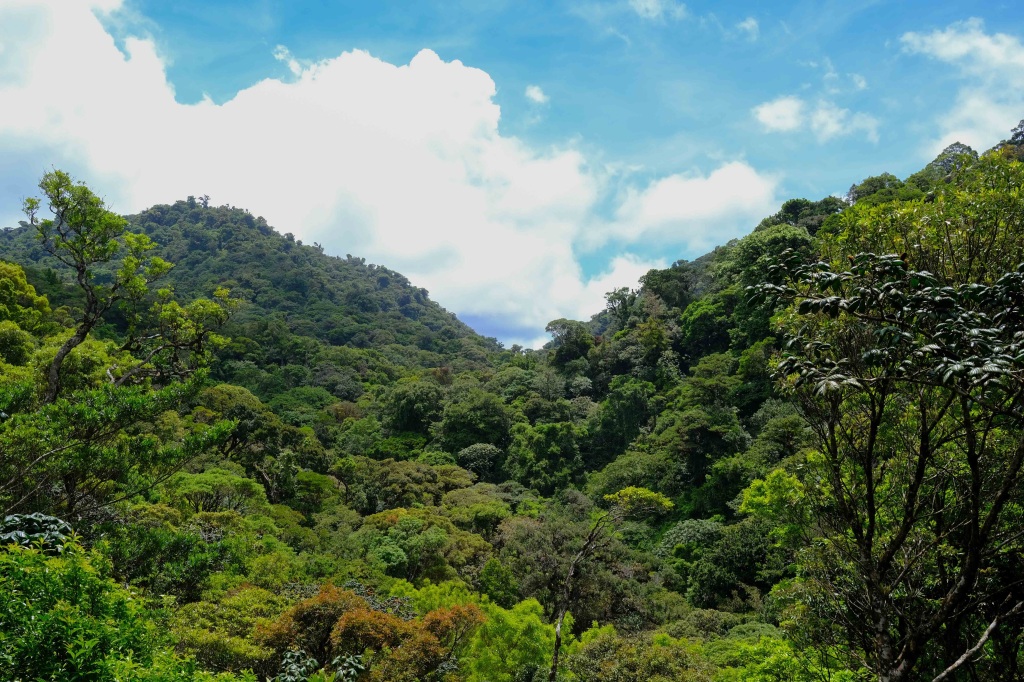
We left relatively early on 20th morning and a long, slow drive (mountains and bad roads, after passing Arenal Lake) brought us to the vicinity of Monteverde – a well-visited cloud forest location in the Central Mountains of Costa Rica – around 3 PM. Up at close to 1500m, the air was pleasantly bracing compared the humidity filled heaviness at La Selva. Our first stop was to the private reserve at Curi Cancha, which was unfortunately closed for visitors by the time we got there. We then drove upto, Cafe Colibri, close to to the entrance of the Moteverde Cloud Forest Reserve, where the hummingbird feeders were abuzz with Violet Sabrewing, Purple-throated Moutaingem and Lesser Violetear – not the ideal way to see any wildlife, but afforded great views and photo ops all the same. Driving between locations produced the colourful Blue-crowned Motmot, Yellow-faced Grasquit, Brown Jay and Keel-billed Toucan.


We signed up for a scheduled, guided night walk at the Reserva Silvestre – reputedly among the best places to see nocturnal wildlife around Monteverde. However, as it turned out for us, and despite and excellent guide, we only saw a distant Hoffman’s Two-toed Sloth, a Nine-banded Armadillo, two coiled up Side-striped Palm Pit Viper, Dink Frog, a sleeping Emerald Toucanet, and a species of Lichen mimicking ‘Stick’ Insect. The location also had multiple groups walking through its trails.


The next morning we signed up for an exclusive guided walk through the trails at Curi Cancha Reserve – another location well known for its bird riches. Unfortunately, the 3 or so hour walk here too proved a touch underwhelming with only Grey-throated Leaf-tosser, White-naped Brushfinch, Sulphur-rumped Flycatcher, Slate-throated Redstart, Nightingale Wren, Red-tailed Squirrel, Central American Agouti, Collared Peccary and White-nosed Coati among the highlights. There are small patches resembling a healthy cloud forest (with tree ferns and moss covered vegetation), but it was mostly a disturbed patch, located in the lower band of where cloud forests occur in the region. We did notice a couple of fruiting ficus trees though, which could be potentially productive for certain mammals (Kinkajou?), if we visited at night.


Sure enough we decided to give Curi Cancha another change for its night trails and joined one of their scheduled walks, which begun soon after nightfall. Once again, the experience turned out to be underwhelming from a mammal diversity point of view and we only got glimpses of what appeared to be a Kinkajou, moving around high in the canopy. There was some interesting macro life on offer though, including glow worms, stick insects and various spiders (including a species of Tarantula). We also saw a Mottled Owl, Emerald Toucanet, Yellow Warbler and Slaty-tailed Trogon – the latter three birds having settled in for the night.


This was our last effort around Monteverde, in what turned out to be an overall underwhelming experience in terms of vertebrate diversity – certainly as compared to Arenal and La Selva. The location is also significantly more touristy, than the other two. However past trip reports suggest that the location has much more to offer in this realm…
We stayed at Caso Rayo De Luna and Belcruz Family Lodge (1 night each), both of which were simple, comfortable, family run accommodations, located close to nature.
22nd to 23rd April, San Gerardo De Dota


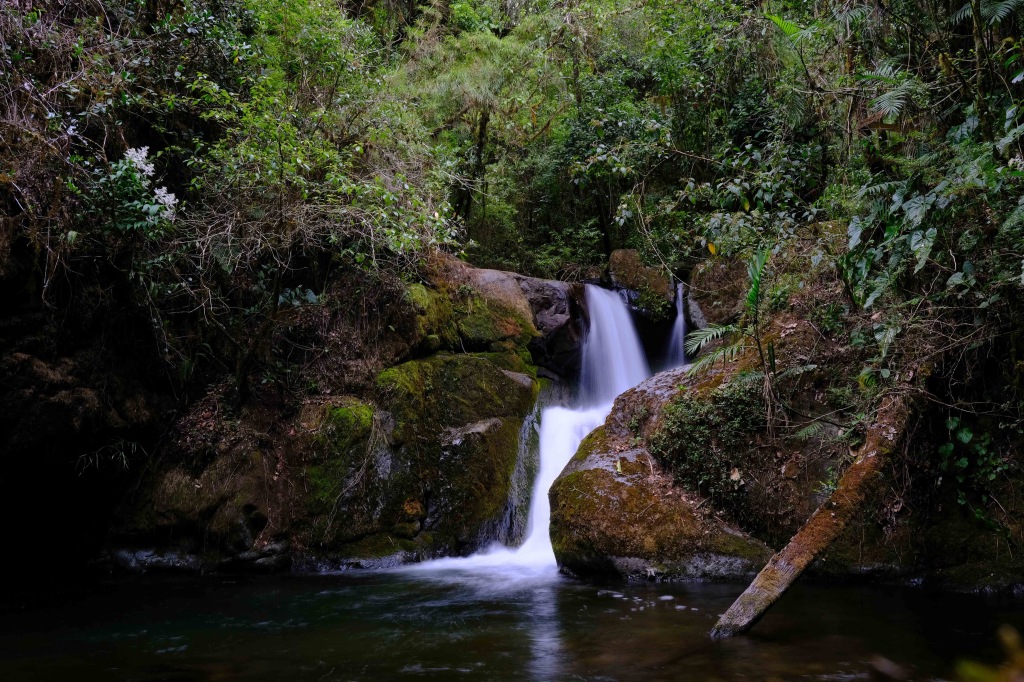
An early start to drop my travel companion off at San Jose Airport, on the way to the Trogon Lodge (2400m) at San Gerardo De Dota – a cloud forest location made famous for its healthy population of Resplendent Quetzal, and its bird diversity otherwise.. The drive took around 6 hours, including sections of hill driving coming down from Monteverde, the traffic in and around San Jose and back uphill towards my destination. Arriving here in the afternoon and sauntering around the lodge and adjacent trails (along a mountain stream and associated cascades) produced Sooty Trush, Rufous-necked Sparrow, Rufous-capped Warbler, Large-footed Finch, Swainson’s Thrush, Stripe-throated Hermit, Volcano Hummingbird, Sooty-capped Chlrolospringus, Slaty Flowerpiercer, Flame-coloured Tanager, Swallow-tailed Kite, Black and White Swallow, Acorn Woodpecker and Turkey Vulture. There were also a handful of Green Spiny Lizard, basking in the warmth of the sunny afternoon, which turned into a cold, cloudy evening


Early (5 am) on the cold next morning, was the start of a lodge arranged quest for the Resplendent Quetzal. It was the nesting time of the year and there were a handful of nests around the property, that enhanced our chances of seeing this most iconic of Central American Birds. The local guides’ suggested that we wait around break of dawn, overlooking a wild avocado tree and sure enough a pair of these elegant birds landed up for an early morning snack, and showed well for about 15 mins. Black Guan joined the party as well. The guide then moved us to a location where the quetzal was nesting – providing great views of the male excavating a nest on a tree trunk, about 10 feet above the ground, in a sparsely wooded area within the lodge premises. After this we walked around the vicinity of the lodge grounds looking for more quetzals, but only saw Emerald Toucanet and Streak-headed Woodpecker, among a subset of birds from the previous evening, until it was time to wind back down the mountains to San Jose, late that very sunny morning.

 Ficus Wildlife and Natural History Tours